Picture slideshow chronicling my time in Haiti...
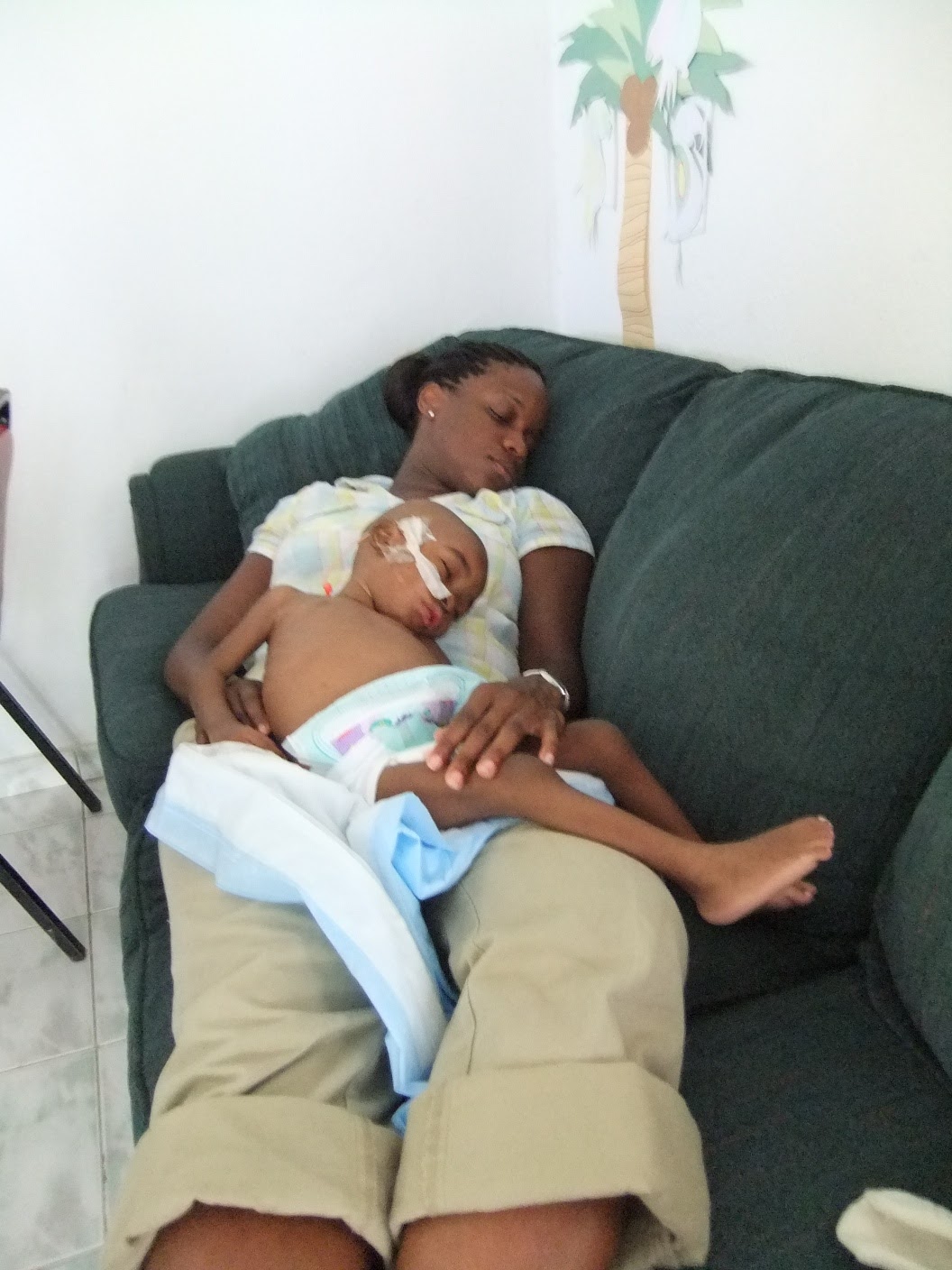
Tuesday, July 6, 2010 – Today, I helped out around the ministry by babysitting Darlenz (DaDa); he’s one of the rescue center kids that require one-on-one attention because of his unique case. A long-term volunteer from the states, Anna (she is 21, and this is her second long-term trip as a volunteer in Haiti within three years), has been giving him that care, but she also serves as a home-school teacher to Licia’s three sons and today she was needed to focus on the boys, but she was also reluctant to leaving DaDa in the rescue center, because he is so weak. I’m so happy I volunteered to take on the assignment for a few hours.

DaDa is the most adorable boy, but his story is so sad. He was brought to the rescue center after the earthquake; both his parents were killed during the earthquake and an aunt brought him to the center to get him the proper help (apparently he was malnourished even before the earthquake). That aunt has not been back since and a 16 year-old sister has been by to visit him once in the 5 months he’s been there. They believe DaDa is 3 years old, and only weighs 16 pounds. He’s only gained 5 pounds since being at the center (he was 11 pounds when he arrived), and they do not believe he is going to make it long term. They believe his problems are far more than just the malnourishment, but they have not come up with any specific diagnosis. In just a few hours, I grew attached to this little boy; he has the greatest smile and is so loving, but it breaks my heart seeing how sick he is.

I also got to spend some time with Denny (I talked about him in a previous post) and Joel; they are the two oldest kids currently in the rescue center. They often get overlooked for attention because they appear pretty normal on the outside and there are plenty of little kids that need holding. They were jumping all over me, and though I was tired and they were heavy, these few minutes of being uncomfortable paled in comparison to the joy that was on their faces because I was focused on them. They are just one of the many reasons why this project is so important and needs to be made a reality. The ministry wants to give them and all the children a better facility, and I’m so happy to be a part of realizing this vision.

I was so excited about coming here to Haiti, but on the eve of my return home to the U.S., I’m a bit sad…I’m not sure I’m ready to go. Yes, I can’t lie; I want to get home and see my family and friends, eat ice cream, continue my job search, take a shower, wash my hair and watch T.V., but I’d be willing to stay longer. I don’t believe I’ve gotten everything I’m supposed to get from Haiti yet; there’s still so much I have to see and experience…
Monday, July 5, 2010 – Today we wrapped up our technical work on site and took the opportunity to lend a helping hand around the ministry and take in the community, but unfortunately the day started out with some bad news, two of the kids in the rescue center had died (which is actually not abnormal considering some of the severe sickness they suffer from); these were the first to die while we were on site. Though I had not directly interacted with the two children who’d passed, I still felt a sense of sadness come over me; these kids did not die because they were born with a disease or a deformity, they died because they had been severely malnourished for so long, and the rescue center just didn’t have enough time to reverse the health damages that had been already done. There was also a stomach virus going around that made most of the children sick and there was an outbreak of chicken pox that spread to 7 of the 60 kids at the center.

In that moment of hearing this information, I thought about my niece Natalia, my acquired nephews TJ and Lennox and all the children who are a part of and will enter my life in the future. These children are happy, healthy kids who can go on about the business of being children without the worry of not having their basic needs provided for. I can’t even imagine them not having food to eat or being severely malnourished. A large number of the center’s kids suffer from a form a malnutrition call Kwashiorkor (Kwash). When a child has Kwash, they are lacking protein in their diet which first stunts their growth and then eventually causes swelling on certain parts of their body. When I first arrived, I noticed some of these children because they are so small and appear to be in so much pain; a lot of them have to have feeding tubes and/ or placed on oxygen to survive. But the most shocking thing is that these children, who appear to be infants because they are so small, are actually toddlers and young children ages 3 to 5 who can actually speak and understand conversation.

If one even spends a minute in the rescue center, you can clearly see the need for a bigger building/ facility where they can adequately care for these sick children. The ministry does the best they can with what they have, but it doesn’t mean they should accept that as the best and final solution for the needs of these children. Once again, I am amazed at the work they do with the facilities that they have. They are meeting the needs of Cazale and the surrounding communities in ways that can only be fulfilled by the grace if God.
Thursday, July 1, 2010 – Today was yet another long day of work, but the long days seem like nothing compared to the long days most Cazale villagers spend going about their daily business of living life. I didn’t feel good most of the day due to a stomach virus, but complaining about my ailment seemed unwarranted when there are hundreds of people who walk long miles and many hours just to get to the clinic for their health care needs. Real Hope for Haiti’s clinic (The Good Samaritan Clinic) is the only source of medical care for Cazale and many surrounding villiages. After interacting with a couple of locals and reviewing the process by which all these people are serviced, there is no doubt that this ministry needs a bigger facility that is actually designed as a medical facility for meeting their basic functional needs. Currently, the clinic operates in a large house that is modest compared to even most houses in the states.
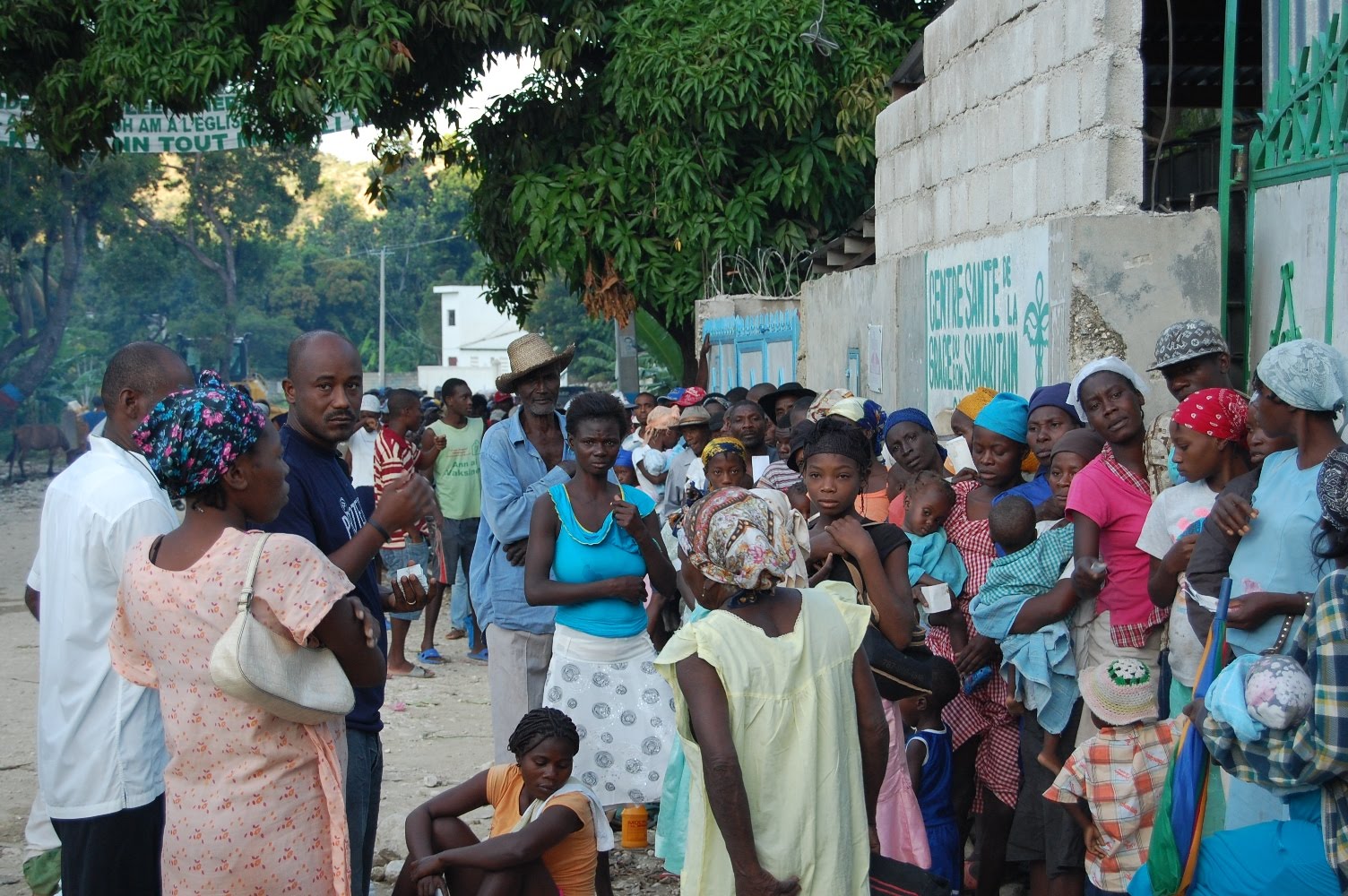
There is one occurrence this week associated with the clinic that sits atop the many moments of awareness that struck a chord with me this week. This happened since Monday, June 28th, but I didn’t know how to verbalize what I felt in the moment; 3 days later, I’m finally able to attempt to describe the situation. The clinic operates 3 days a week (Tuesday, Wednesday and Thursday) to treat a variety of non-life threatening medical cases to at least 350 people per day, with Tuesday being the busiest day because of the break in between treatment days. The clinic services on a first-come-first served basis, but recognizing critical cases and pushed them to the head of the line as needed.

People coming for service are handed a ticket number at the beginning of the day outside of the clinics gates and 50 at a time are let into to clinic gates to sit in the waiting area at a time to wait to be triaged and ultimately serviced. People come from near and far to receive care and thus are willing to get to the clinic gates a day before to start lining up to receive a number to ensure they will be seen during that day before the clinic closes at 6pm. They sleep overnight outside the gates in the elements just to make sure they can get medical care. They don’t have camping chairs or sleeping bags or a soft surface to help make their (12- 18 hours) wait more comfortable.
As we, the project team, were walking back to the guest house on Monday night after our nightly devotion and technical debriefing meeting, we had to go through the clinic gates (because the guest house is next to the clinic and our work areas is in a house 2 doors down the street). What I wasn’t prepared for was all the people lined up on the ground in front of the gates sleeping on the ground in front of the gates. They were literally lined up on the exposed ground piled on top of each other sleeping amidst the dirt and trash lined street. We could not get into the gate without having to break through the human chain on the ground and stepping over people.
In that moment, I wanted to run away and get back to my comfortable American life because the scene was too difficult to bare, but I had no choice but to step over those people in the middle of the night with our flashlights (there are no streets lights so it is pitch black) all the while thinking why them Lord, why not me, what did they do to deserve such a bleak fate, what did I do to deserve the comforts of my American life? Are they not humans too, why are they to be made to live in such sub-human conditions? That moment was the hardest human moment I’ve ever experienced because it was clouded with my personal guilt because I knew once I stepped over them, I would be going inside and sleeping in a bed; I also felt guilty because I knew I wouldn’t even for a moment trade places with anyone of those over 200 people.

I saw it with my own eyes and I couldn’t even image what it feels like being that person on the ground with lights flashing in your face as you’re trying to sleep with these supposedly better people trying to get by. Did they feel shame, did they feel less than human, did they think we thought we were superior to them; did they look at me and think why I wasn’t subjected to their conditions? I was one of 2 black people on our 12 person team; I looked like them, but I got to go into the gates and live with the white people “blancs”, so was there something better about me versus them? God I don’t know what to do with this feeling at the pit of my stomach that makes me want to scream. I know life’s not far, but we as humankind have to do better for the less fortunate. What are you trying to teach me in this moment? Because right now, I feel overwhelmingly powerless. For the first time in my life, I can actually say Maya Angelou’s book “I Know Why the Caged Bird Sings” makes sense, and the book's message can apply to many different types of life experiences…